behind the curtain: how veguard.pro parses system signals without dropping packets
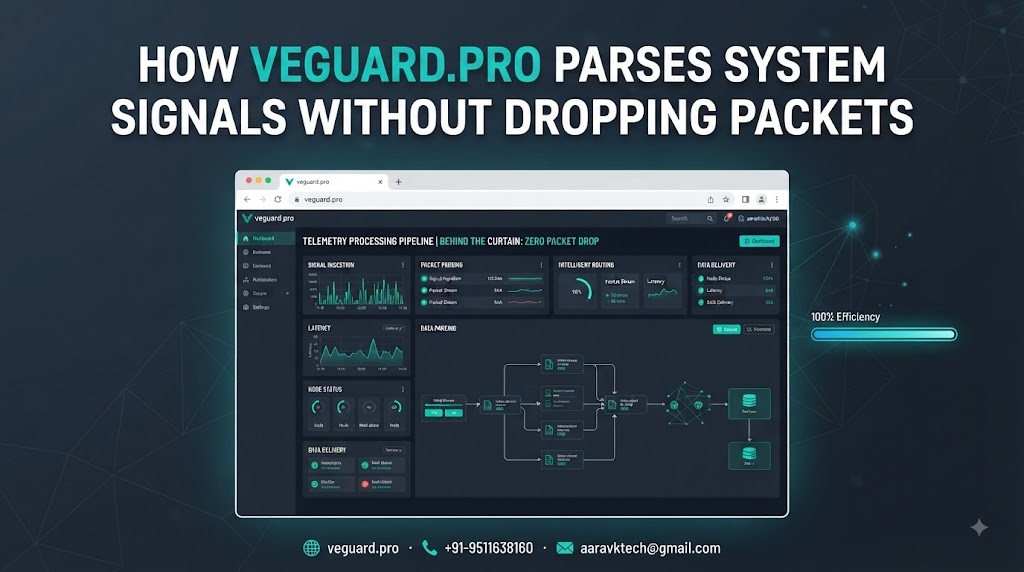
When you look at a security dashboard, it is easy to take for granted the heavy lifting happening underneath the surface. Modern digital platforms generate an immense volume of telemetry data every single second. User logins, file modifications, configuration tweaks, and API calls create a continuous digital exhaust. If your monitoring tool cannot keep up, critical threat indicators slip through the cracks. Today, we are pulling back the curtain to look at how veguard.pro processes these high-throughput system signals without choking performance or dropping vital data packets.
The Challenge of High-Volume Telemetry
In traditional setups, logging everything often leads to a severe trade-off. Either the system slows to a crawl because the database is bogged down by constant write operations, or security teams turn down log verbosity and create blind spots. For growing businesses, ecommerce platforms, and SaaS products, neither option is acceptable. You need complete visibility across your entire digital footprint without sacrificing user experience or system responsiveness.
How Our Pipeline Ingests and Filters Signals
Behind the scenes, veguard.pro uses a multi-tiered event streaming and parsing architecture. Instead of hammering a single primary database with raw, unstructured logs, incoming signals pass through an intelligent edge-filtering layer. This layer normalizes incoming data, strips out redundant chatter, and instantly flags anomalies before they ever hit permanent storage. By prioritizing high-risk indicators like unauthorized access attempts or suspicious configuration shifts, the system ensures that urgent security events get immediate priority.
Balancing Speed with Deep System Inspection
Speed means nothing if accuracy is compromised. Our backend engine splits telemetry handling into concurrent processing channels. Operational health checks run on one independent track, user activity tracking runs on another, and critical security alerts bypass standard queues entirely. This modular separation guarantees that a spike in routine user traffic will never delay an urgent security notification or slow down your administrative dashboard.
My Take on Building Resilient Security Infrastructure
If you are evaluating monitoring tools for your business, do not just look at the pretty charts on the frontend. Ask vendors how their background pipeline handles traffic spikes and data throughput. Tools that rely on bloated, legacy database structures will eventually fail you when your business scales. If you want a setup that runs smoothly, stays responsive under heavy load, and never misses a beat, building on a modern, decoupled telemetry architecture like veguard.pro is hands-down the smartest move you can make for your operations.
🌐 veguard.pro · 📞 +91-9511638160 · 📧 aaravktech@gmail.com