Myth: A recognized device is automatically a trusted device
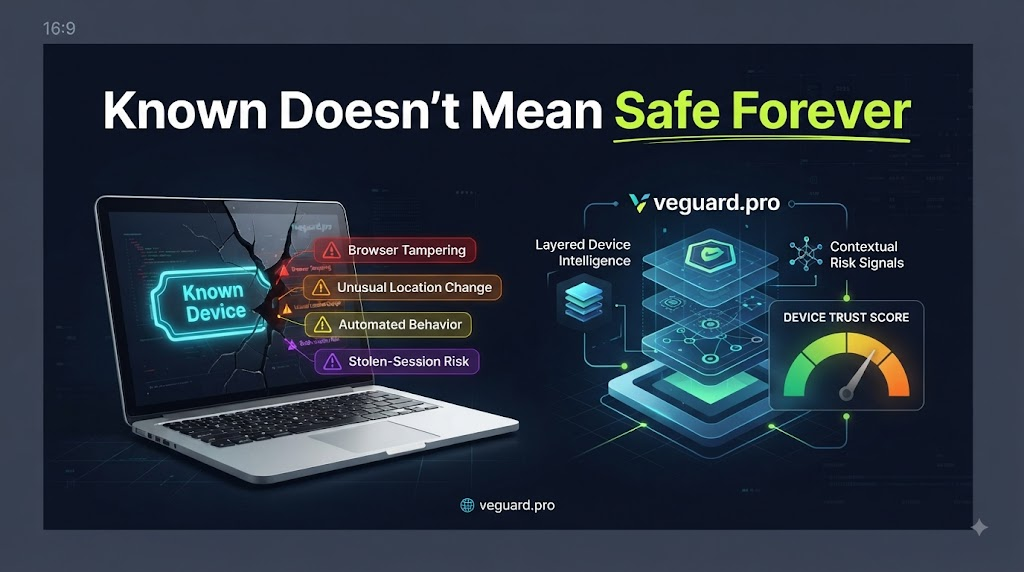
Known Device, New Risk: Why Recognition Is Not Permanent Trust
A returning device feels reassuring. Your system has seen its browser before, the user has logged in successfully, and nothing looked unusual during the last visit. It is tempting to treat that device as permanently trusted.
That assumption creates a dangerous blind spot. Device recognition tells you about history. Security decisions must also account for what is happening now.
Why “Seen Before” Is Only One Signal
A recognized device can support a trust decision, but it should not make the entire decision. Between one session and the next, the browser environment may change, access may come from a very different context, or a legitimate session may be reused by someone else.
Even the same physical device can behave differently over time. New automation tools, modified browser settings, suspicious extensions, or unusual interaction patterns can turn a familiar endpoint into a higher-risk session. Recognition remains useful, but it is not proof that the current activity is legitimate.
Trust Should Change When Context Changes
Modern digital security works best when trust is dynamic. Instead of assigning a permanent “safe” label, businesses can evaluate each session using a combination of current device intelligence and contextual risk signals.
For example, a returning device that presents consistent browser characteristics and normal access behavior may move through the experience with minimal friction. The same recognized device could receive additional scrutiny when important signals change unexpectedly.
This approach does not mean challenging every returning user. It means allowing trust to rise or fall according to current evidence. The goal is a more precise response: smooth access when risk is low, stronger verification when risk increases, and blocking only when the evidence justifies it.
Why Static Allowlisting Falls Short
Static device allowlists are simple, but simplicity can become weakness. Once a device is marked as trusted, future activity may receive less attention—even when the surrounding context no longer matches the original decision.
That is especially risky for SaaS platforms, marketplaces, financial services, membership sites, and other businesses where account access carries revenue, data, or operational value. A permanent pass can give attackers more room to exploit compromised sessions or imitate familiar environments.
Continuous evaluation closes that gap by treating recognition as historical context, not an unlimited credential.
How veguard.pro Supports Smarter Trust Decisions
veguard.pro helps businesses assess device and session risk using current signals rather than relying only on whether an endpoint has appeared before. This gives security, fraud, and product teams a clearer basis for deciding when to allow, verify, limit, or block activity.
The result is a more balanced model of digital trust: one that protects valuable user journeys without assuming every returning device is unchanged forever.
A known device can still be a good sign. It simply should not be the final answer. Build trust around the current session, respond when risk changes, and replace permanent labels with continuous intelligence. Explore veguard.pro to make every access decision more informed.
🌐 veguard.pro