the 'security log completeness' myth: why storing raw logs means nothing if your system is missing structural change awareness
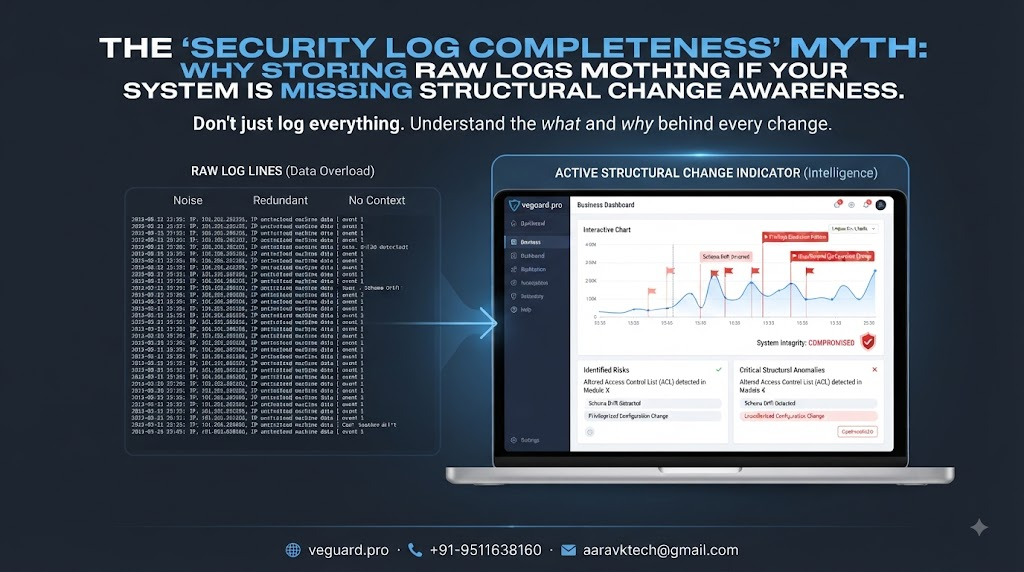
The Great Log Illusion Why Raw Data Archives Are Failing Modern Businesses
Ask any IT administrator or engineering lead how their company handles digital safety, and you will likely hear a reassuring answer about logging. Servers are configured, auditing is enabled, and terabytes of raw text data stream quietly into secure cloud buckets every single day. The common assumption is simple: if every action leaves a trace in a log file, the business is protected.
Unfortunately, this perspective harbors a dangerous misconception. Archiving raw log data is not the same as having actionable security intelligence. When an unauthorized user modifies a core access rule or a subtle configuration drift occurs in your software stack, those changes hide in plain sight among millions of routine system events. By the time a human analyst sifts through the noise to find the anomaly, the damage is already done.
Understanding the Limits of Traditional Log Archiving
Log files are fundamentally historical records. They tell you what happened after the fact, much like a security camera recording an empty room after a valuable asset has been removed. Traditional monitoring systems flood management dashboards with endless notifications, creating alert fatigue while missing the structural shifts that precede a real security incident.
For growing startups, ecommerce brands, and distributed agencies, manually auditing these logs is completely unsustainable. Teams lack the hours required to parse complex text outputs while trying to ship product features and serve customers. What businesses need instead is an automated shift from passive recording to active structural awareness.
What Structural Change Awareness Actually Means
Instead of treating every log entry with equal weight, a smart guard system looks at the anatomy of your digital ecosystem. It tracks baseline behaviors and flags structural anomalies the moment they occur. If a background script alters database permissions, if an employee profile gains unauthorized elevated privileges, or if a website health parameter shifts unexpectedly, the system recognizes the structural divergence instantly.
This approach eliminates the guesswork. Rather than asking your team to hunt for a needle in a digital haystack, automated monitoring highlights the exact configuration change that requires attention, complete with a timeline and context.
Bringing Intelligent Automation to Your Operations
Deploying a platform like veguard.pro transforms how companies manage digital risk. By combining real-time login monitoring, activity tracking, health checks, and automated reporting into a single security dashboard, organizations can maintain complete visibility without hiring a massive dedicated cybersecurity department. It acts as an intelligent digital watchdog that understands the normal cadence of your operations and immediately spots deviations.
My Take
If you are running a lean business or scaling a digital product, stop spending hours writing custom scripts to parse raw log files. Invest in a dedicated monitoring layer that provides structural clarity out of the box. For most teams, implementing an automated visibility tool like veguard.pro pays for itself the first time it catches an unmonitored configuration drift before it turns into a costly operational headache.
🌐 veguard.pro · 📞 +91-9511638160 · 📧 aaravktech@gmail.com